Medical Fitness is a one-hour, professionally led exercise programme that takes you from the end of treatment to regular, independent training; it is available at both MozgásKlinika clinics in District II, Retek utca and Pasarét. It is the top of the MozgásPiramis®: for people whose pain has settled but who still need strength, stability and confidence for full load.
Why do you need a bridge between treatment and the gym?
Because there is a big gap between the two worlds. In physiotherapy you work with slow, controlled movements; in a gym nobody knows you had a herniated disc six months ago or that your knee was operated on. So many people are either too cautious and do not load themselves enough, or go straight back to their old training plan and the complaint returns.
Medical Fitness handles that transition. By MozgásKlinika’s definition it is led by a professional who knows your treatment history and adjusts the load to it.
What is the programme built on?
According to the clinic, the focus is on:
- strength and endurance: with gradually increased resistance;
- stability and balance: involving the deep muscles, the trunk and the hips;
- coordination and movement control: with more complex tasks that resemble everyday movements;
- general load capacity: so your body can handle work, carrying or sport.
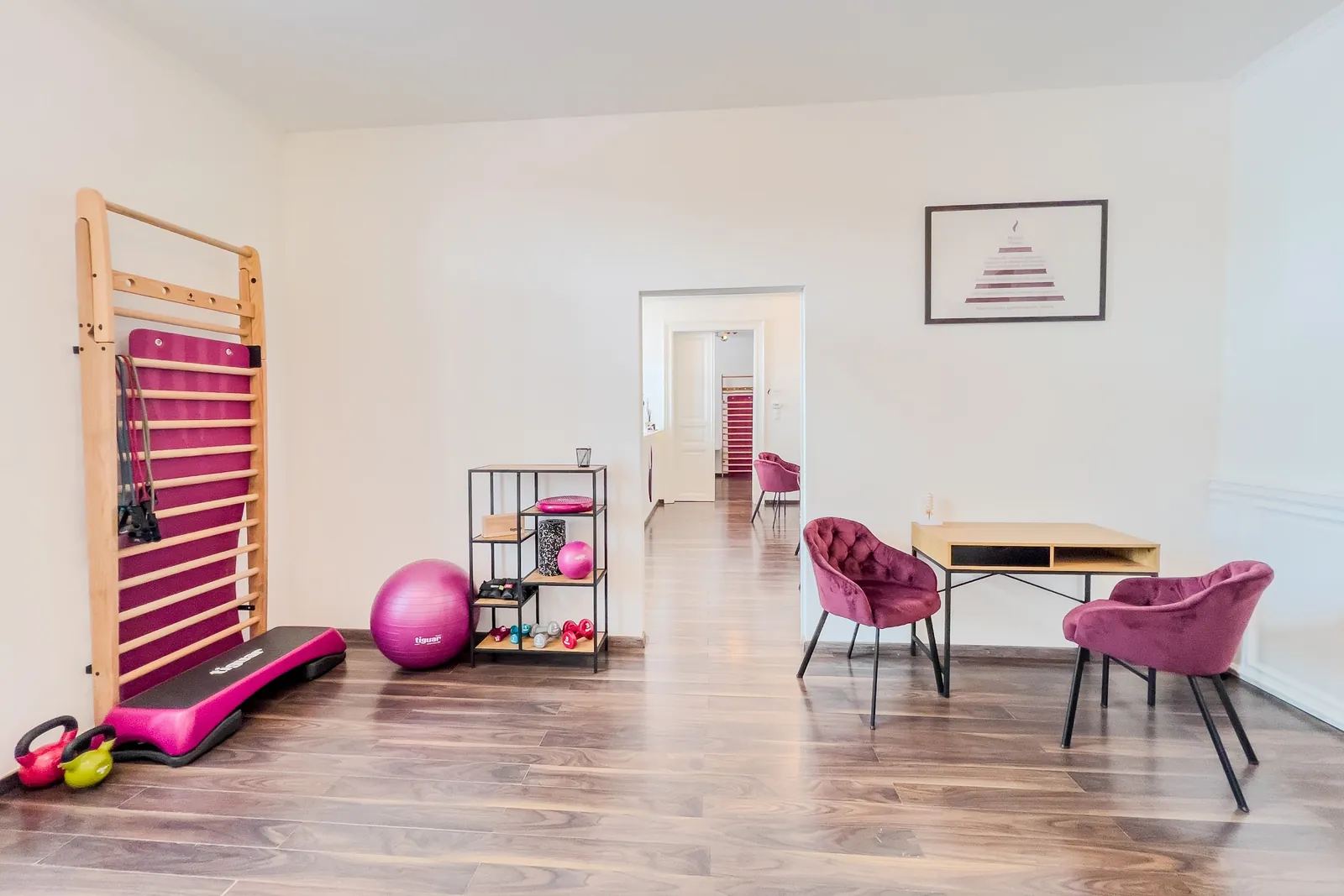
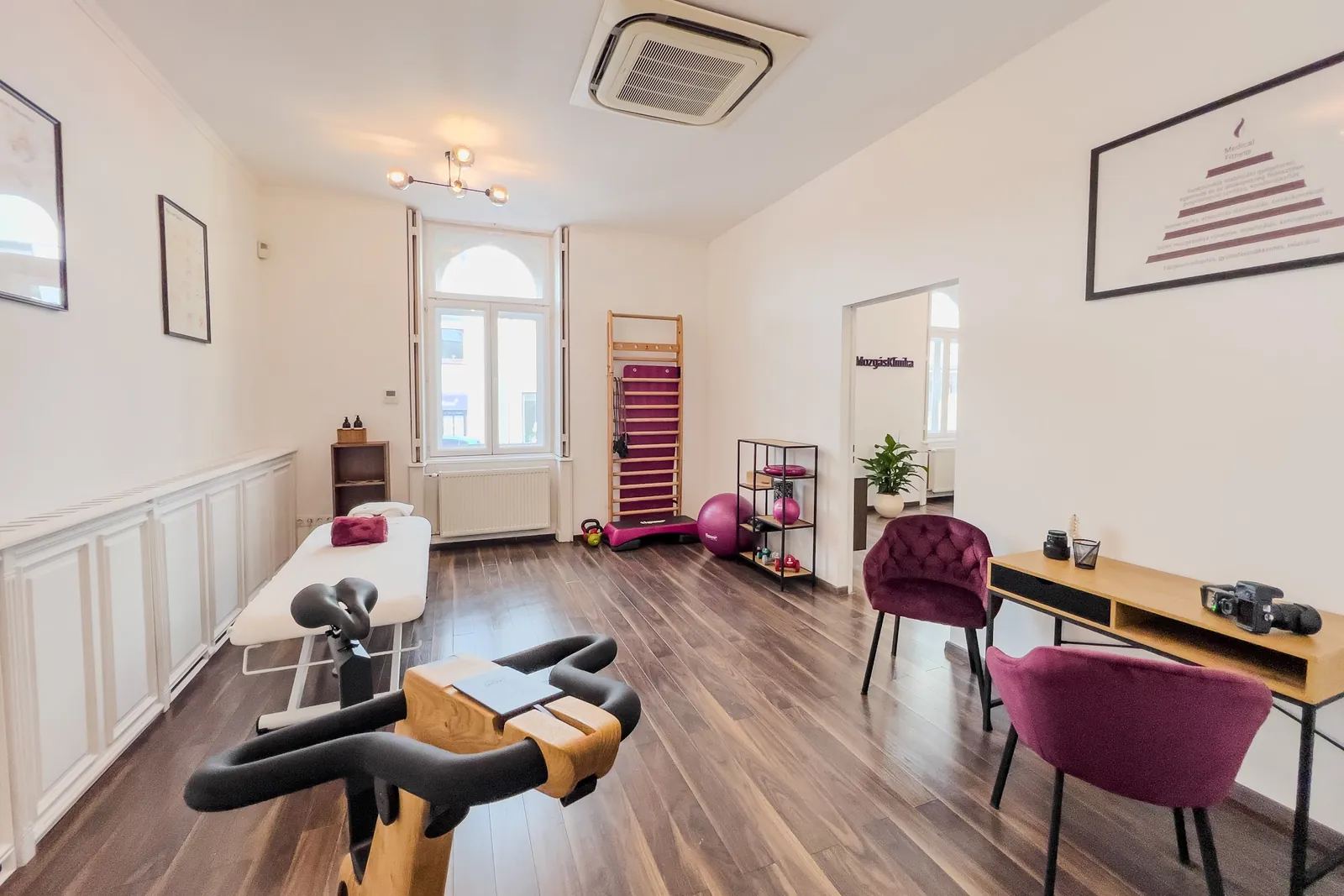
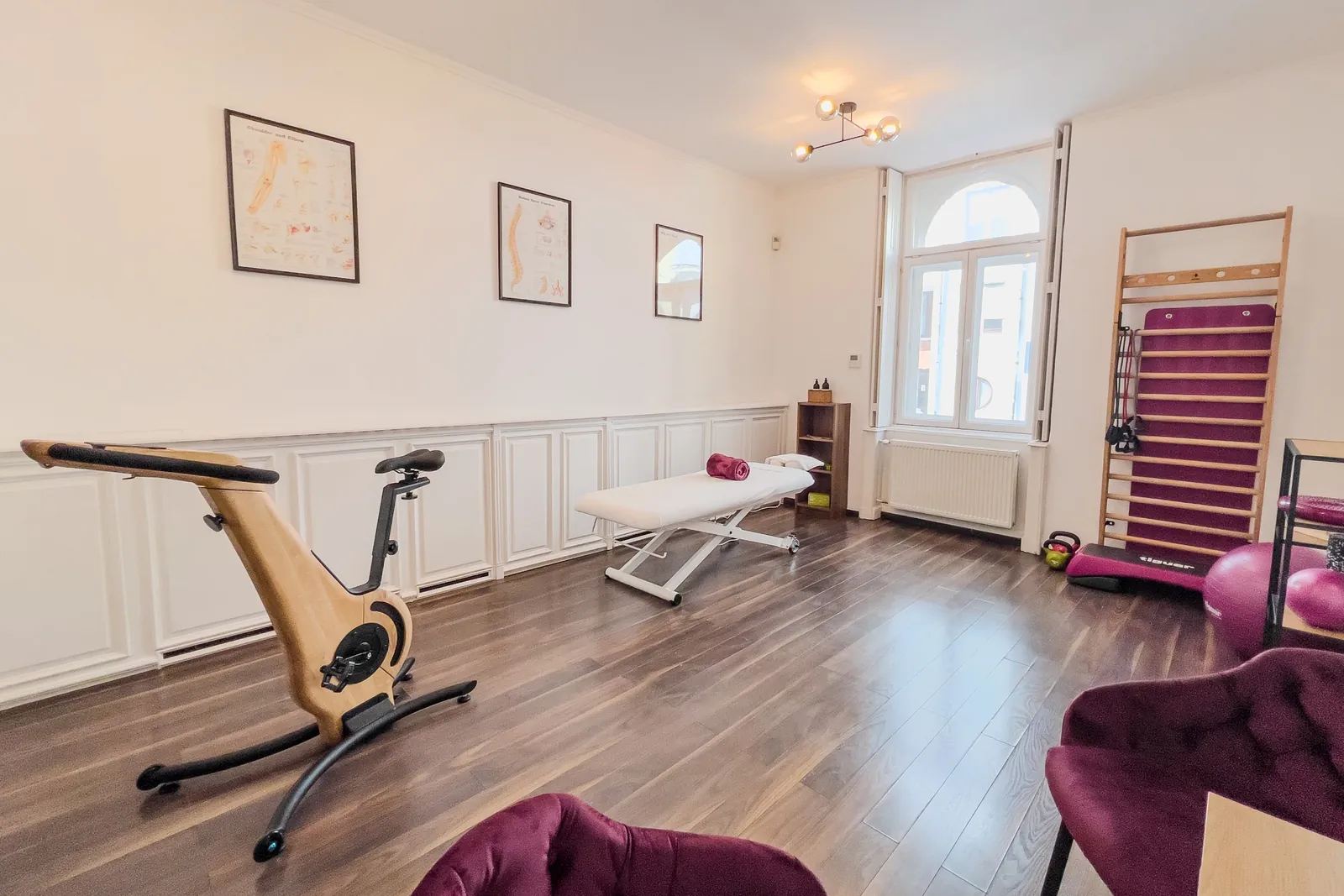
An individual plan may include functional, plyometric (jumping) and agility (quick change of direction) exercises if your condition and goal justify it. The Retek utca exercise room has an exercise bike, a rowing machine, a cable machine, wall bars and dumbbells. The Pasarét room has wall bars, resistance bands, dumbbells, a balance dome, a rowing machine, a gym ball and a mirror.
How much exercise is enough after treatment?
General recommendations give a useful reference point. The WHO recommends at least 150 minutes of moderate-intensity activity a week for adults. The NHS puts it as 150 minutes of moderate or 75 minutes of vigorous activity a week, plus muscle strengthening of all major muscle groups on at least two days. WHO figures show that in 2022, 31% of adults, about 1.8 billion people, did not reach that level.
After treatment these numbers feel out of reach for many. Medical Fitness aims to get you there step by step, with load matched to your condition, and to help you keep it up on your own afterwards.
In Hungary, the Central Statistical Office’s 2019 survey found that 59 percent of adults do no sport at all in their free time. Only three in ten are active for at least the 150 minutes a week recommended by the WHO. The US MedlinePlus advises building up your activity level slowly. If you have trouble moving or balancing, or worry that exercise might not be safe for you, it advises checking with a health care provider before you start.
Who is it for, and who is it not for (yet)?
It is an option if you have worked through the lower levels of the MozgásPiramis®: pain has settled, range of movement is back, strength has improved, and now the goal is everyday, work or sports load. Also if you are past surgery and physiotherapy has ended, but you do not dare to train alone. According to the clinic, it can also be chosen with a weight-loss or endurance goal.
It is not for you yet if pain is strong, the injury is fresh, or your doctor has set limits on loading. Then physiotherapy and manual therapy come first.
If you have not been to either clinic before, Medical Fitness also starts with a first assessment, because the programme builds on its results.
How is it different from personal training?
The difference is the starting point. A gym trainer usually starts from your goal (weight loss, muscle, performance). Medical Fitness starts from your treatment history: it knows which movement caused the complaint and where to load more carefully. According to the clinic, the load increases cautiously and gradually.
Who leads it at the two clinics?
- Retek utca: Rideg Szofi lists Medical Fitness among her fields, alongside sports injuries and rehabilitation after surgery.
- Pasarét: sessions are led by Franyó Nóra, Sztányi Borka, Pusztai Emese and Munkácsy Eszter.
If you have already been treated at one of the clinics, it makes sense to continue where your history is known.
When should you stop and ask for advice?
During training, these signs mean stop
- the old pain returns sharply, stronger than before;
- swelling appears on a previously operated or injured joint;
- numbness or weakness in an arm or leg;
- chest pain, unusual breathlessness or dizziness under load.
With chest pain or feeling faint, call 112 immediately. In the other cases, tell the physiotherapist before you continue.
What does it cost, and how do you book?
| Clinic | One session (60 minutes) | Pass |
|---|---|---|
| Retek utca | HUF 22,990 | ask at the clinic |
| Pasarét | HUF 22,990 | 12 sessions HUF 250,000, valid for 3 months |
Prices as of October 2026, confirmed by the clinics; the Pasarét pass is listed on its booking page. For prices and conditions at either clinic, call +36 30 403 1857. Other prices are in the prices article. Long-term activity is covered in this article, and getting back to sport in this one.