There is no single right posture, because the body is built for varied movement, not one pose. At a desk, how often you change position matters as much as how you sit. A well set-up workstation helps, but cannot replace frequent breaks and regular exercise.
Why is sitting up straight not enough?
Because even the straightest posture tires you if you hold it still for hours. In MozgásKlinika’s view, posture is a dynamic, continuously regulated function that adapts to load and is linked to both the nervous system and the musculoskeletal system. It follows that a “bad” position is not harmful in itself: the problem is when there is no way out of it and most of your day is spent in it.
Complaints are shaped by long periods in the same loading position, reduced variety and individual load capacity together. Two people at the same desk can react quite differently.
The computer workstation guide of the US occupational safety agency (OSHA) also starts by saying there is no single “correct” posture or arrangement that fits everyone, only basic design goals.
How should you set up your workstation?
The UK Health and Safety Executive (HSE) guidance on display screen work gives these starting points:
| Item | HSE recommendation |
|---|---|
| monitor | top of the screen roughly at eye level, about an arm’s length away |
| keyboard | slightly below elbow height, so the shoulders do not hunch up |
| chair | a gap of 2-3 cm between the front edge of the seat and the back of the knee |
| laptop | for long work, a stand plus a separate keyboard and mouse |
These are set-up aids, not rules. If it still hurts in the same place after adjusting, the set-up is probably not the main cause.
How much sitting is too much?
Nobody can give an exact limit, but the NHS guidance for adults says long periods of sitting should be broken up regularly with movement. It also recommends 150 minutes of moderate activity a week and muscle strengthening on at least two days. A few practical ideas:
- stand up for every phone call;
- keep your water and the printer away from your desk;
- switch to standing work now and then if you can;
- move at the end of the working day too, not only at weekends.
In Hungary, Central Statistical Office data from 2019 show that 41 percent of the population spend at least seven hours a day sitting or lying down outside sleep, and the share of people who work sitting rose from 36 to 40 percent between 2014 and 2019. Hungarian law also has a specific rule for screen work: under Decree 50/1999 (XI. 3.) EüM, continuous screen work must be interrupted by breaks of at least ten minutes every hour, and as a rule these breaks cannot be combined.
What can a physiotherapist do?
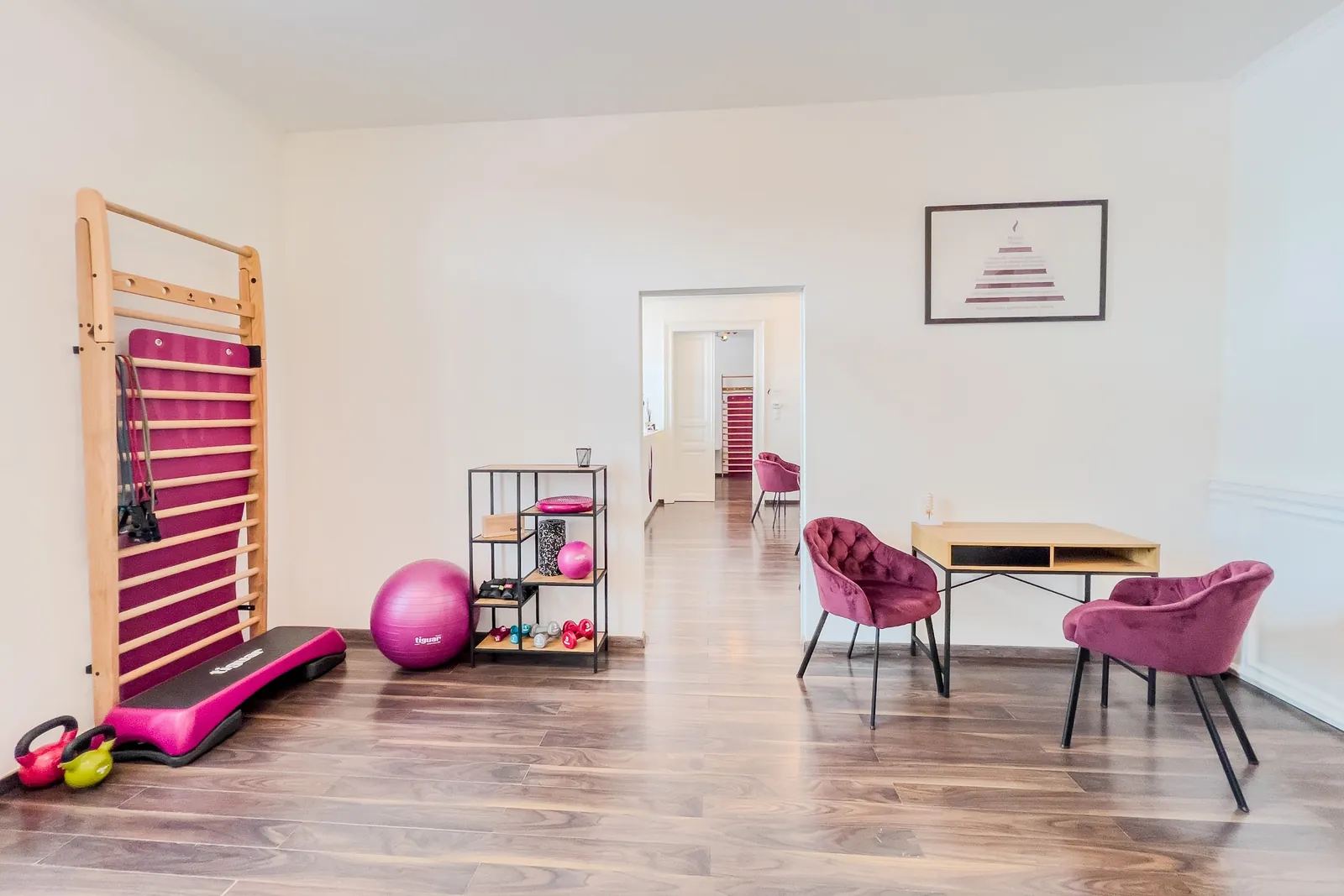
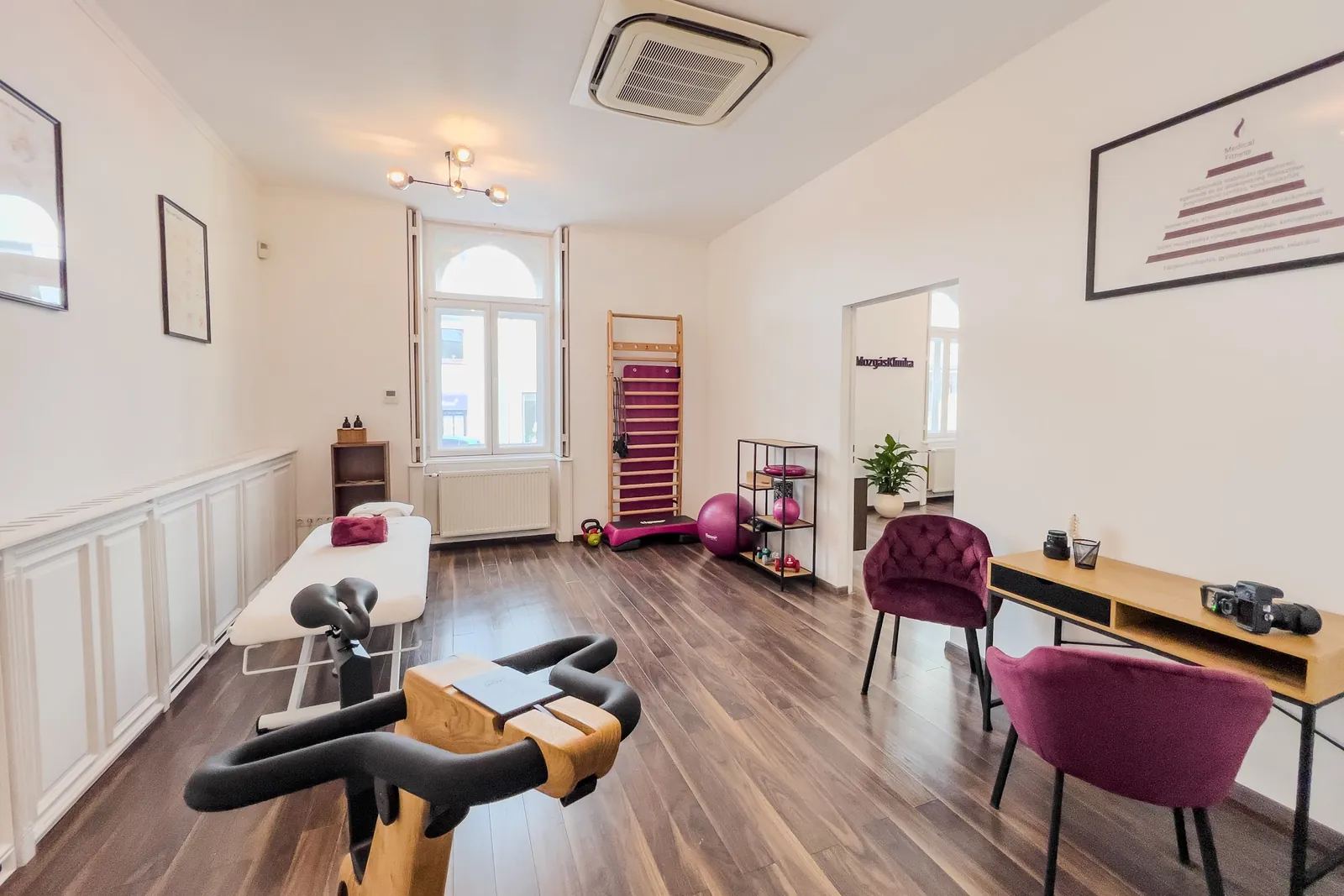
Both clinics treat posture problems:
- Retek utca: Rideg Szofi lists posture-correcting and spinal stabilisation exercise, and the treatment of tight muscles and trigger points; Deák Borostyán names posture-correcting exercise, neck stiffness and the posture changes known in Hungarian as “banyapúp” (a rounded upper back).
- Pasarét: Franyó Nóra, Sztányi Borka and Pusztai Emese all list posture correction, Franyó Nóra together with neck and back pain.
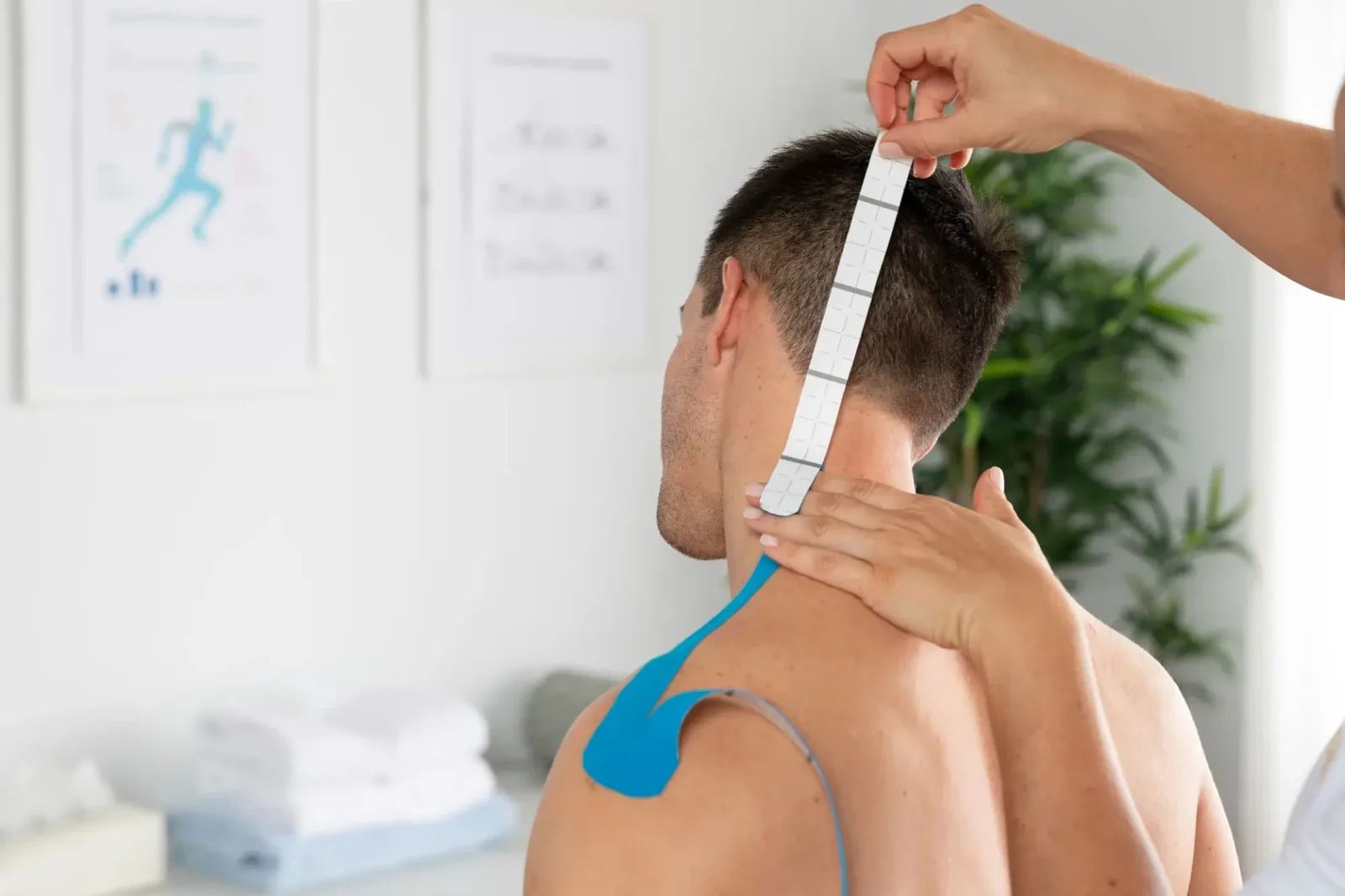
Work starts with a first assessment, which includes a posture analysis: how you sit, how you stand, and which movement triggers the complaint.
The aim is not to teach you one pose but, following the logic of the MozgásPiramis®, to develop the right muscle activation, movement control, strength and stability. Physiotherapy strengthens the postural muscles, and manual techniques improve restricted movement. Home exercises are chosen and checked by your physiotherapist, so we do not give a generic routine here either.
When does office pain point to something more serious?
With desk work, see a doctor about these
- numbness, tingling or weakness in the hand or fingers that does not go when you stand up and move;
- pain spreading into the arm or leg and getting stronger;
- back or neck pain that wakes you at night and does not ease at rest;
- visual disturbance or a severe headache while working at a screen.
With sudden weakness, difficulty speaking or chest pain, call 112 immediately.
Neck complaints have their own article, and low back pain is covered here. If your elbow hurts when using a mouse, the tennis elbow article may help; how treatment fits into a working day is covered here. Related treatments are on the posture correction and preventive spine exercise pages.