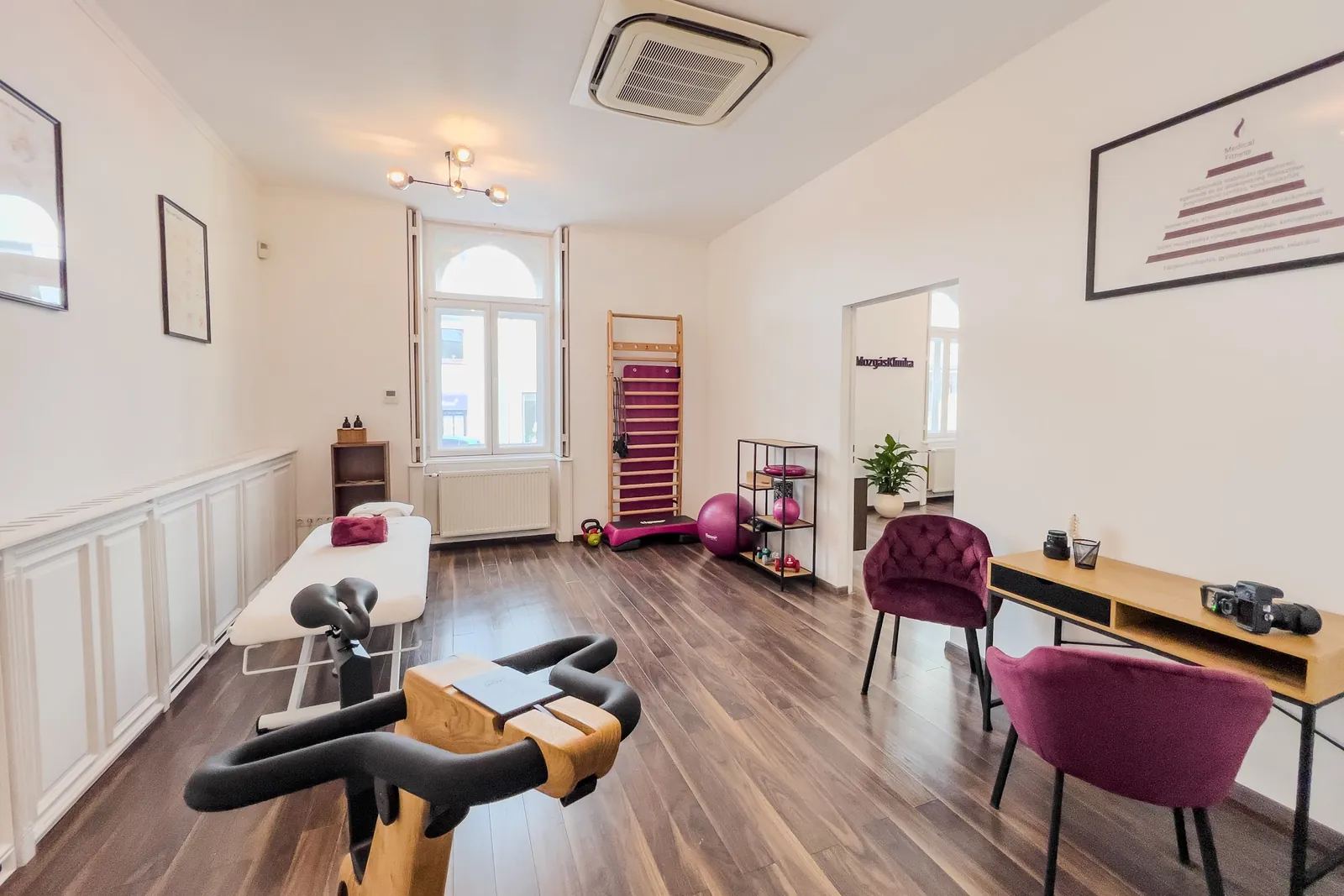
A physiotherapist starts with an examination: they look at what is limiting your neck’s movement, then improve range of movement and load capacity with hands-on treatment and targeted exercise. According to the NHS, most neck pain goes away within a few weeks; if it does not, keeps returning with desk work, or comes with headaches or tight shoulders, it is worth having it examined. At both MozgásKlinika clinics in District II, Retek utca and Pasarét, the first step is an assessment.
What can make the neck hurt and stiffen?
According to the NHS, the most common causes are everyday ones: an awkward sleeping position, long hours at a computer, a sudden clumsy movement or a muscle strain. Less often a trapped nerve is behind it, and the pain may then spread into the arm, with numbness. Whiplash after a rear-end car crash can also cause neck pain that appears days later.
The neck does not work on its own. The weight of the head is carried by the cervical spine and the shoulder girdle muscles together. So in a neck problem the movement of the shoulder blades, stiffness in the upper back or even tension in the jaw can play a part. Pain also depends on several factors: long periods in one position, little variety, stress and your individual load capacity together affect when and how much the neck complains.
What does desk work do to the neck?
In MozgásKlinika’s approach there is no single “good” or “bad” posture. Posture is constantly regulated activity that adapts to load. Problems are more likely when you sit in the same position for hours, with little variety in movement, compared with how much your neck and shoulder girdle can take.
Hunched over a laptop, holding a phone with your shoulder or on a long drive, the neck is in different positions, but always still for a long time. The World Health Organization (WHO) recommends breaking up long sitting and moving regularly; for the neck, too, variety is the key, not a perfect chair. According to the WHO’s 2024 fact sheet, in 2022, 31 percent of adults, about 1.8 billion people, did not move as much as the guidelines recommend. Workplace set-up is covered in the desk work article.
The US National Library of Medicine’s MedlinePlus says neck pain is often caused by muscle strain or tension, usually from overuse such as sitting at a computer for too long. It adds that the pain may also come from the shoulder, jaw, head or upper arms. In Hungary, Decree 50/1999 (XI. 3.) EüM on screen work requires employers to organise work so that continuous screen work is interrupted by breaks of at least ten minutes every hour.
What can you do at home in the first few days?
Based on the NHS advice:
- a low, firm pillow may help at night;
- heat or cold packs can ease the pain;
- move your neck gently and regularly within the limits of pain, rather than holding it stiff;
- do not wear a neck collar: it is better to keep the neck moving;
- if you cannot turn your head properly, do not drive or cycle, because you cannot see traffic safely.
Which exercise is a good starting point for you is something the physiotherapist tailors after the examination, so we do not give an exercise routine here. If the pain has not improved in a few weeks, or keeps coming back more often, an examination gives you more than further trial and error.
What does the physiotherapist look at?
At the 60-minute assessment you talk about when and in which positions your neck hurts, how many hours a day you sit, your work and your sleep, and then comes a physical examination:
- range of movement of the neck and upper back in all six directions;
- movement of the shoulder and shoulder blade, because they affect the load on the neck;
- strength and sensation in the arms, if the pain spreads;
- posture analysis sitting and standing, and which positions make the problem better or worse.
If the neck pain comes with headaches, note for a few days beforehand when they start and how long they last. A photo of your desk, showing the screen and chair, can also help, so the physiotherapist can match the advice to your real set-up.
Who treats neck problems at the two clinics?
- Retek utca: Rideg Szofi lists neck pain, treating tight muscles and trigger points, and posture exercise among her fields. Deák Borostyán works with neck stiffness, neck pain and the posture changes known in Hungarian as “banyapúp” (a rounded upper back).
- Pasarét: Franyó Nóra names neck and back pain, Sztányi Borka low back and neck pain, and Pusztai Emese neck pain.
Which treatments may be used?
- Manual therapy: hands-on techniques to improve restricted movement and release tight muscles. With strong pain, this can help get movement going.
- Physiotherapy: strengthening the deep neck flexors and the muscles that stabilise the shoulder blade, movement control, a home exercise routine.
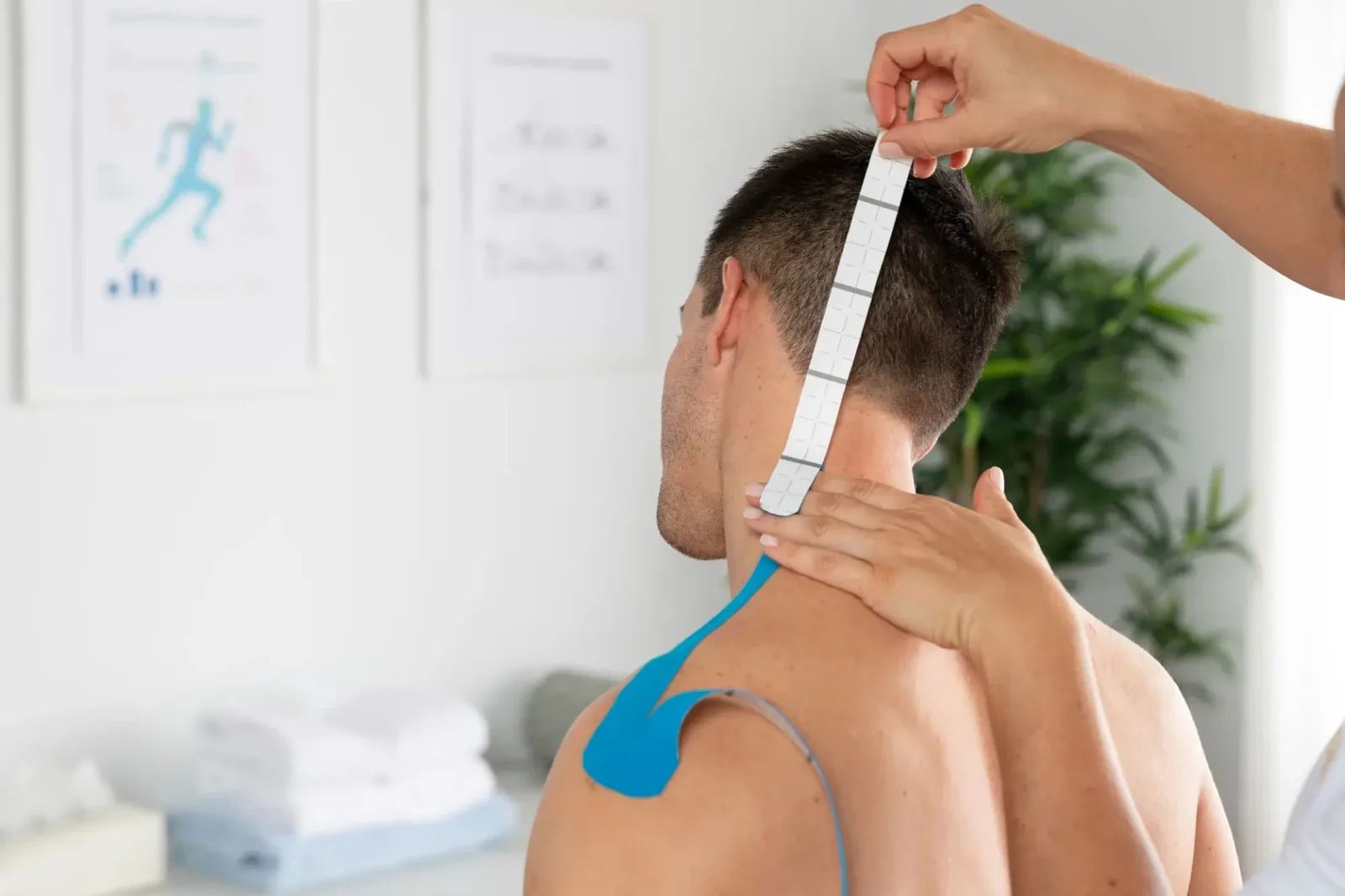
- Combined therapy: both in one 50-minute session; physical therapy such as kinesiology tape can be added if needed.
Treatment follows the MozgásPiramis®: after easing pain comes rebuilding range of movement, strength and movement control. You get the recommendation after the examination, and treatment starts in the same session. This article explains how the treatments differ.
Can neck pain be linked to the jaw?
It can: the neck, shoulder girdle and jaw affect one another, which is why the jaw-joint assessment also examines the neck and shoulder girdle. Jaw-joint treatment is available at the Pasarét clinic, with Franyó Nóra and Sztányi Borka; the jaw-joint article covers it. If your lower back hurts too, the low back pain article may help, and shoulder problems have an article of their own.
When is neck pain urgent?
With neck pain, do not wait for physiotherapy in these cases
- a stiff neck with high fever, severe headache, sensitivity to light or a rash that does not fade when you press a glass on it: call 112 at once (the NHS says it can be a sign of meningitis);
- neck pain after an accident, fall or heavy blow: call 112;
- increasing numbness, tingling or weakness in the arm or hand;
- a cold, pale arm or hand.
See a GP if the pain has not improved after a few weeks, or painkillers do not help (NHS).
What is the next step?
If neck pain keeps coming back and limits you, book an assessment at whichever clinic is closer: Retek utca 26, by Széll Kálmán tér, or Házmán utca 4, by Budagyöngye. Both are open on weekdays from 8:00 to 20:00, so a session can fit before or after work. The related treatments and prices are on the neck pain and posture correction pages.