The MozgásPiramis® is the MozgásKlinika network’s own treatment method: five levels that build on each other, from easing pain through range of movement, strength and stability to full load at work or in sport. At both District II clinics, Retek utca and Pasarét, it is the frame of every treatment plan, and the assessment decides which level you start on.
Why a pyramid and not a list of treatments?
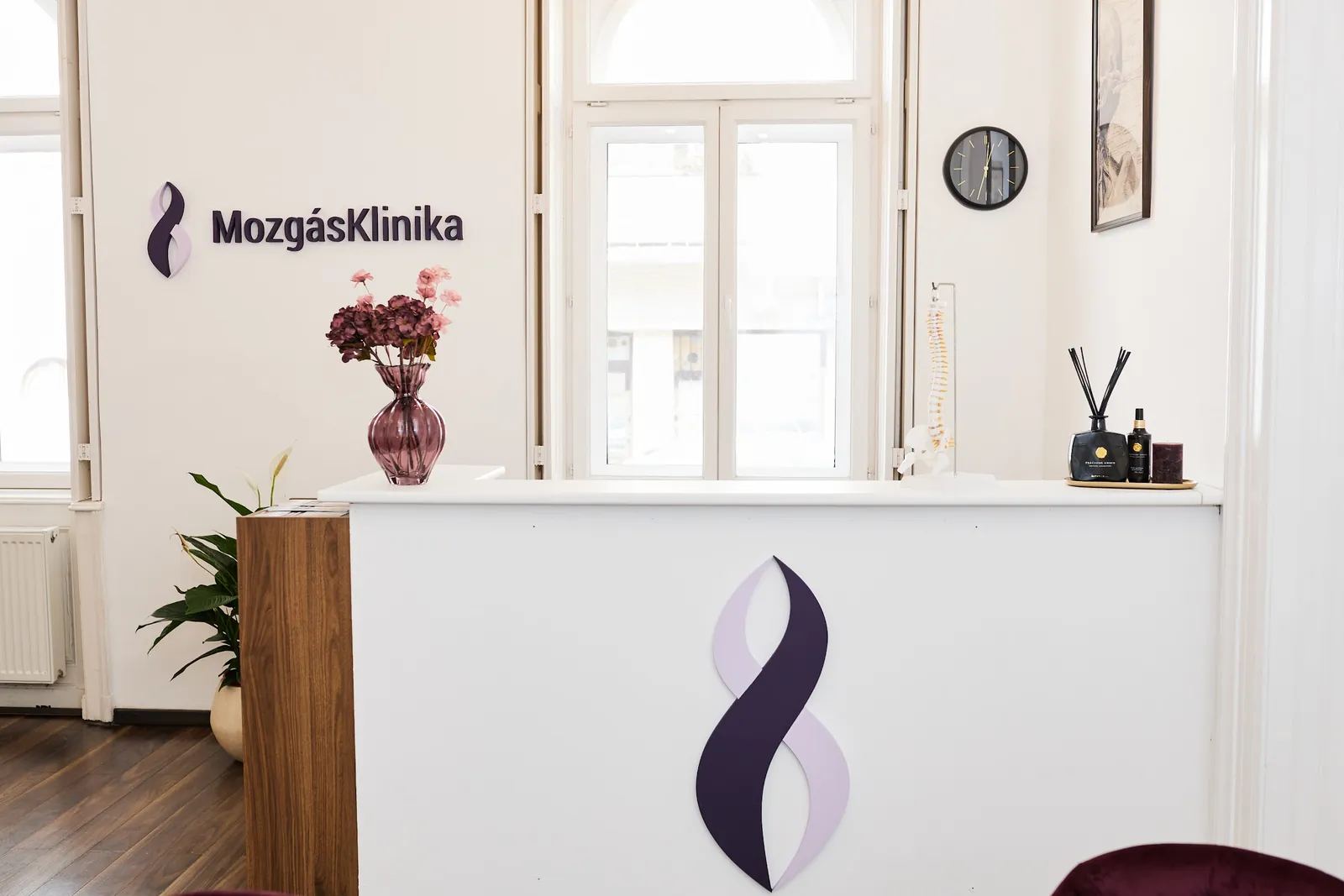
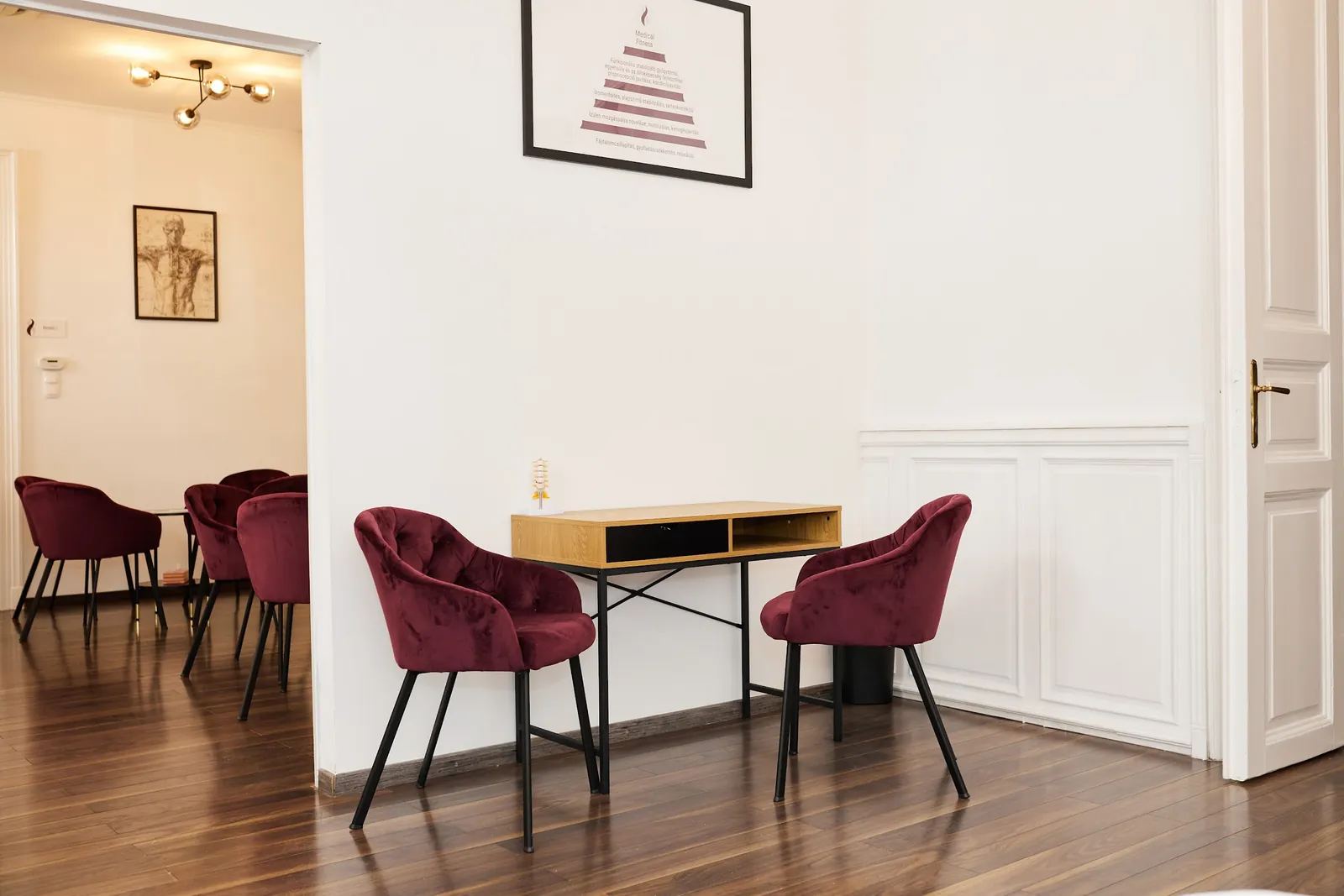
Because the levels build on each other. Building strength is hard while a joint’s movement is restricted, and stability and movement control rely on strength. The chart hangs framed behind the reception at Retek utca and on the wall of the consultation corner at Pasarét. This is not by chance: at the end of the first visit your physiotherapist uses it to show you where you are.
The World Health Organization (WHO) describes rehabilitation as a set of interventions that aim to improve functioning and reduce disability. According to the WHO, about 2.4 billion people worldwide could benefit from rehabilitation, and most of that need comes from musculoskeletal conditions. But function does not come back in one step: someone who could hardly bend a week ago has a different task from someone who walks without pain but feels their knee again when running. The pyramid makes that difference visible.
What are the five levels?
| Level | Treatment goal | Typical tools |
|---|---|---|
| 1 | treating pain and the current complaint | manual therapy, physiotherapy, physical therapy if needed |
| 2 | restoring the joint range of movement you need | manual therapy and mobilising exercises |
| 3 | building muscle strength and load capacity | active physiotherapy |
| 4 | functional stability and movement control | complex, coordination exercises |
| 5 | returning to everyday, work or sports load | gradual loading, sport-specific work |
The levels are also described on the MozgásPiramis® page.
What happens on each level?
- Pain and the current complaint. Here manual therapy “opens a window”: less pain and easier movement make room for continuing with active exercise. The aim is not full load but making movement possible again.
- Range of movement. The goal is the range you need for daily life, work or sport. An office worker needs different shoulder movement from a swimmer; the measure is your goal, not a table.
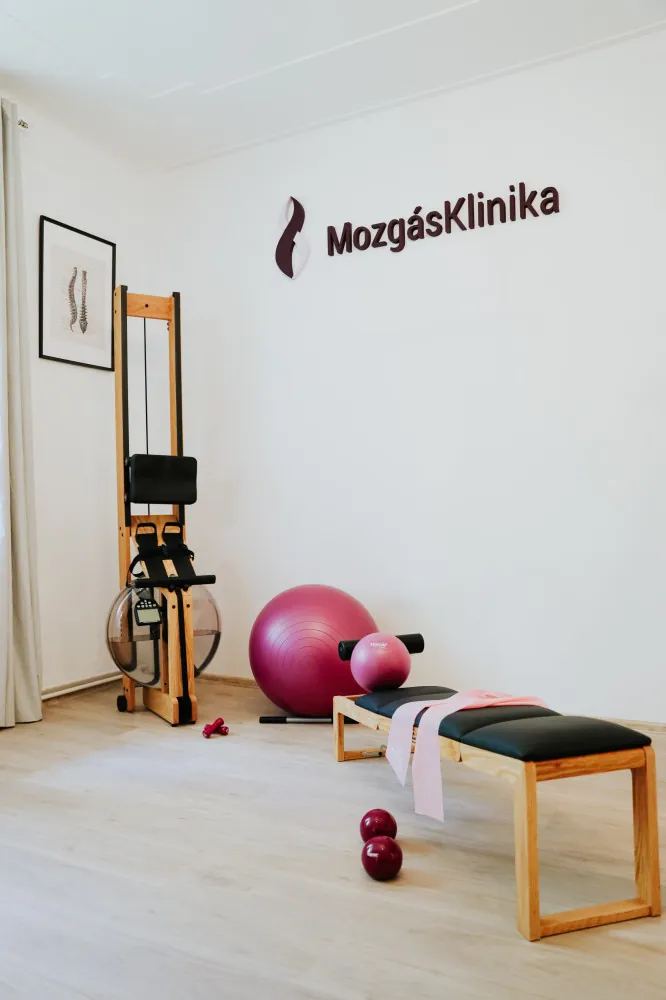
- Muscle strength. Building strength and muscle activation. If the problem is not too little strength but a muscle switching on at the wrong time, you relearn that first. The Pasarét treatment room has wall bars, resistance bands and hand weights for this.
- Functional stability. Trunk stability, movement control and practising your own movements: lifting, stairs, running, a particular sports movement. At Pasarét this is where the balance dome and the large mirror come in, so you can see your own movement.
- Full load. Gradually increased load until the goal is within reach. That may be a hike in the Buda hills, a tennis match or a full working day without pain.
How do you know which level you are on?
Not by the name of the complaint, but by how your body works right now. Of two patients who arrive with a herniated disc, one starts on level 1 because strong pain means they can hardly bend. The other starts on level 3 because the pain is mild but the trunk muscles are weak. The assessment shows this: a conversation, a look at your reports, a physical examination and posture analysis.
There are no rigid borders between the levels. In one week the focus may still be on easing pain while the first strengthening exercises already appear; and after a heavier load you may need to step back a level.
How many sessions you need and how often is planned together with your physiotherapist. The NHS also says the physiotherapist advises on the expected number of sessions after the examination; neither clinic has published a fixed block of treatments.
An example: how does someone move up the pyramid?
Take an office worker who has been sitting at the computer with low back pain for weeks and no longer likes lifting their child.
- Level 1: the aim is less pain. There is more hands-on treatment, and we look for movements that do not make it worse.
- Level 2: bending and turning come back. The patient can pick something up from the floor again.
- Level 3: strengthening exercises for the trunk and hip muscles follow.
- Level 4: the exercises start to resemble real movements: lifting, carrying, squatting with a load.
- Level 5: back to full load, with the aim of keeping active regularly and independently.
This is an illustration, not a promise: how long each level takes depends on how a person responds to treatment.
Why not stop when it no longer hurts?
Because less pain is only the end of level 1. Strength, stability and load capacity have not yet been rebuilt, and everyday load (carrying, long sitting, training) hits the body just as before. People who stop at this point often stop on level 2 or 3, and the old load can bring the complaint back.
The British NICE guideline on low back pain (NG59) also puts exercise-based care first and recommends hands-on treatment only as part of it. The NHS says physiotherapists usually give exercises to do at home between sessions: on the higher levels, more and more depends on what you do yourself between visits.
What comes after the top of the pyramid?
Medical Fitness: a supervised, 60-minute exercise programme built by a professional who knows your treatment history, leading you from treatment into regular exercise. It is available at both clinics. At Retek utca it is among Rideg Szofi’s fields, and at Pasarét Franyó Nóra, Sztányi Borka, Pusztai Emese and Munkácsy Eszter lead it, in the exercise corner with a rowing machine and gym ball.
The WHO 2020 guidelines recommend 150–300 minutes of moderate activity a week for adults and muscle strengthening on at least two days a week. In 2022, 31 percent of adults did not even reach 150 minutes a week. Medical Fitness can cover the strengthening part, in a setting where the load is matched to your earlier complaint. There is a separate article on it, and one on staying active after treatment.
The US Department of Health and Human Services’ physical activity guidelines give the same range: 150 to 300 minutes of moderate-intensity aerobic activity a week for adults, such as brisk walking. They add muscle-strengthening activity on at least 2 days a week. In Hungary, Central Statistical Office (KSH) data from 2019 show that only one adult in six does both.
How do you get started?
The first step is an assessment at either clinic: Retek utca 26, by Széll Kálmán tér, or Házmán utca 4, by Budagyöngye. The first-visit article tells you what to expect; this article covers prices, and the sports injury article the path for athletes.
When is the pyramid not the first step?
If the problem started after an accident, or comes with fever, sudden weakness, spreading numbness or problems passing urine or stools, you need a medical examination first. Level 1 of the pyramid can only follow after that. In an emergency, call 112.