You can return to sport after an injury when the injured area can take the load your sport puts on it, not simply when the pain has gone. According to the NHS, most sprains and strains improve in about two weeks, but strenuous training is best avoided for up to 8 weeks. At both MozgásKlinika clinics in District II, Retek utca and Pasarét, rehabilitation starts with an assessment and leads you back to sport in gradual, checkable steps.
What is the difference between a sprain and a strain?
A sprain affects the ligaments that hold a joint together, for example the ankle after a bad step. A strain affects muscles or tendons, for example the hamstring during a sudden sprint. Both can cause pain, swelling, bruising and difficulty moving the area.
The US NIAMS divides sports injuries into two groups: sudden (acute) injuries, such as a sprain or a fall, and overuse injuries. Overuse injuries build up slowly under repeated load, for example in running or throwing sports. The type of injury also shapes the treatment and the pace of return.
What should you do straight after the injury?
For sprains and strains, the NHS recommends the PRICE approach for the first 2–3 days:
- Protection: protect the injured area from further injury;
- Rest: stop training and reduce the load, but do not keep it completely still;
- Ice: an ice pack or cold compress wrapped in a towel; the NHS page gives the timing and frequency;
- Compression: an elastic bandage to reduce swelling, not too tight;
- Elevation: keep the injured limb above the level of your heart whenever you can.
In the first few days, the NHS says to avoid heat (hot baths, saunas), alcohol and massage, because they can increase swelling.
How long does recovery take?
According to the NHS, most sprains and strains feel better after two weeks, but strenuous activity such as running is best avoided for up to 8 weeks, depending on how severe the injury is. More severe injuries can take months. The NHS also says physiotherapy may help if recovery is slow, and names sports injuries among the typical uses of physiotherapy.
When should you see a doctor?
With a sports injury, call 112 or go to A&E at once if
- you heard a crack when the injury happened;
- the injured area has changed shape or looks deformed;
- the injured area is numb or tingling;
- the skin around the injury is blue, grey or cold.
You also need medical care if the pain is very severe, or you cannot stand on or put weight on the injured limb. If it does not start to improve with home care, book a GP appointment (NHS).
Why is “it no longer hurts” not enough?
Because pain and swelling usually go before the injured ligament or muscle has regained its strength and load capacity. Going straight back to your old training plan at that point exposes tissue that is not ready to the loads sport demands: a change of direction, a landing after a jump, a sprint. That is why the MozgásPiramis® treats pain relief as only the first level: range of movement, strength and stability come next, and full sports load only at the top.
How is the return built up?
The path is the same at both clinics:
- Assessment: how the injury happened, earlier injuries, reports, a physical examination comparing the injured side with the healthy one. Then we look at the demands of your sport: which sport you want to return to, and at what level.
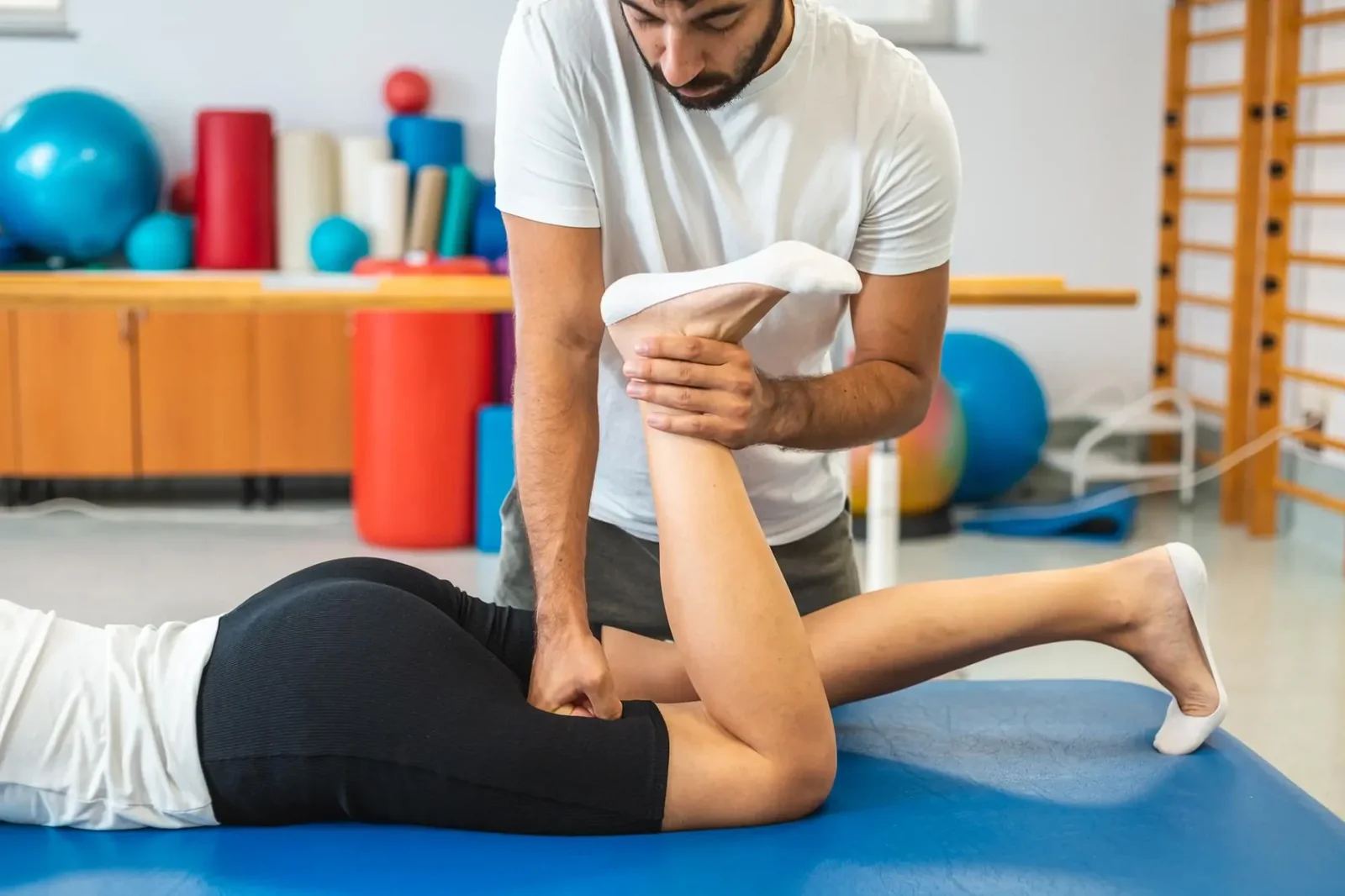
- Foundations: easing pain, with manual therapy if needed, rebuilding range of movement and relearning controlled movement patterns.
- Strength and stability: gradually increasing load on the injured side and the muscles around it, movement control, single-leg and balance exercises.
- Sport-specific physiotherapy: gradually practising the movements of your sport (running, jumping, changing direction, throwing); according to the clinic’s description, with functional, plyometric (jumping) and agility (change-of-direction) exercises once your condition allows.
- Medical Fitness: a professionally supervised step towards regular training, which helps you keep and build on what you have achieved; there is a separate article on it.
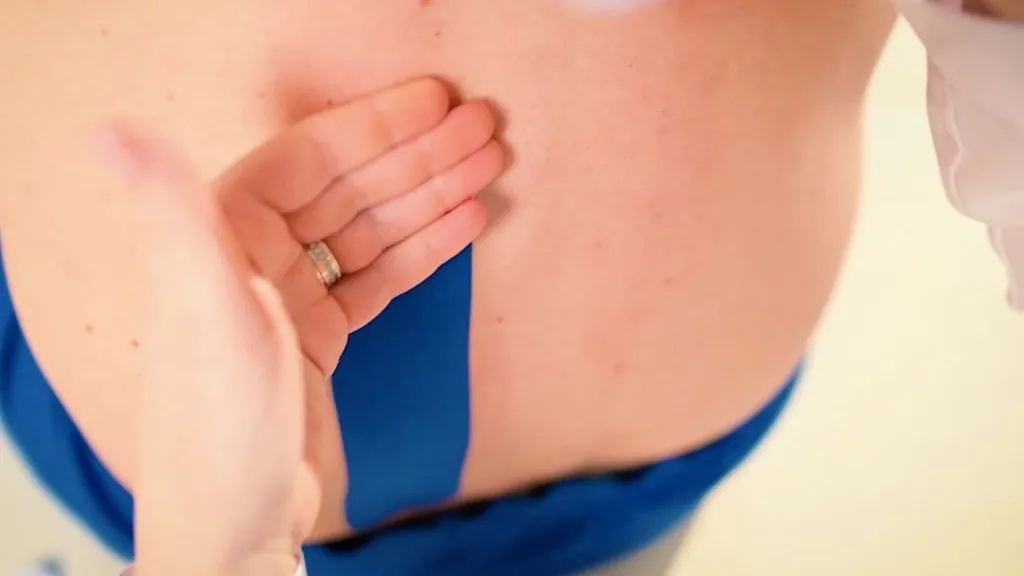
Supporting tools such as kinesiology tape are covered in the physical therapy article. Sport-specific physiotherapy cannot be booked online; at both clinics the first step is the assessment, and you arrange further sessions with your physiotherapist after it.
If the injury involves the knee, shoulder or elbow, see also the articles on knee pain, shoulder pain and tennis elbow.
Hungary’s Health Care Act (Act CLIV of 1997, section 100) names both physiotherapy and sports therapy as integral parts of rehabilitation medicine. In MozgásKlinika’s practice, the return to sport is the last stage of a planned rehabilitation process, not a date in the calendar.
Who treats sports injuries at the two clinics?
- Retek utca: Rideg Szofi lists sports injuries, shoulder, hip and knee problems, and Medical Fitness among her fields; Deák Borostyán also treats sport-related musculoskeletal problems.
- Pasarét: Munkácsy Eszter names physiotherapy after injuries and sport-specific physiotherapy, along with rehabilitation of shoulder and knee injuries; Pasarét’s Medical Fitness sessions are led by her, Franyó Nóra, Sztányi Borka and Pusztai Emese.
Who decides when you can go back?
You do, together with your physiotherapist and, if needed, your sports doctor. The decision rests not on the calendar but on how close the injured side is to the healthy one in strength, movement, jumping and changing direction, and how it responds to gradually increased training. No one can guarantee a date in advance.
What can lower the risk of another injury?
The WHO’s 2020 guidelines recommend muscle-strengthening activity on at least two days a week for adults, alongside sport. The US MedlinePlus lists accidents, poor training practices or improper gear, not being in shape, and not warming up or stretching enough among the causes of sports injuries. It advises that if you get hurt, you stop playing, because continuing can cause more harm. At the end of rehabilitation the physiotherapist also discusses how to fit strength work into your own training.
Where can you run or hike near the clinics?
This article covers the parks and running spots around Retek utca, and this one the walks and climbs around the Pasarét clinic. After an injury, choose among them gradually, in agreement with your physiotherapist: flat Városmajor is a different load from a sloping forest path.
If a sports injury is slow to improve or keeps coming back, book an assessment at whichever clinic is closer: Retek utca 26, by Széll Kálmán tér, or Házmán utca 4, by Budagyöngye. The first-visit article tells you what to expect, and the related treatments are on the sports injuries page.