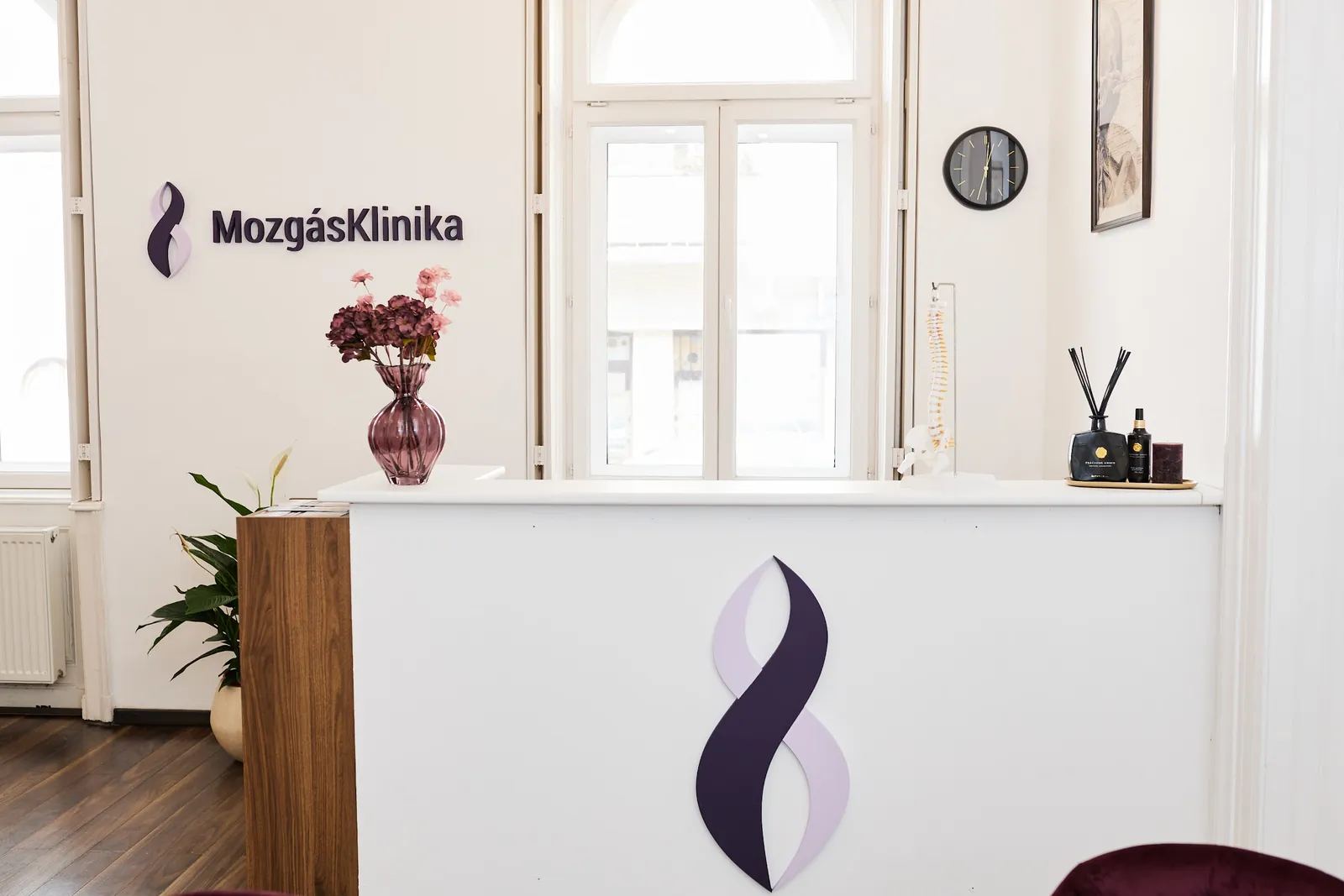
Your first visit at both MozgásKlinika clinics in District II, Retek utca and Pasarét, is a 60-minute assessment. We talk through your complaint, look at your findings, examine you, draw up a therapy plan and, if you agree, start treatment. It costs HUF 24,990 at either clinic (October 2026).
Why is the assessment required if I already have a diagnosis?
Under the clinics’ own rules, the first meeting always starts with a musculoskeletal assessment, even if you have already been examined or treated elsewhere, or arrive with a known medical diagnosis. A diagnosis tells you the name of the problem; the assessment shows how you move right now and how much load your body can take. The two are not the same.
The same pain can have different backgrounds. Two people’s low back pain may feel very similar. Yet in one a joint’s movement has become restricted, in another the muscles switch on at the wrong time, and in a third everyday load has suddenly increased. So two patients with identical MRI reports may need quite different treatment plans.
The British NICE guideline on low back pain (NG59) also starts with assessment: before treatment is chosen, the nature of the problem and the person’s situation need to be understood. The clinician should also judge how likely the problem is to persist.
What happens in the 60 minutes?
The NHS describes the first physiotherapy appointment like this: the physiotherapist asks about your symptoms, history and lifestyle, examines the affected area and then discusses options with you. Both clinics follow the same structure.
Conversation and a look at your reports
The physiotherapist asks how long the problem has lasted, what started it, what makes it worse or better and how it changes during the day. They also ask what an average day looks like for you, whether you do sport, how you sleep, and whether you have had injuries or operations. If you bring reports (discharge summary, X-ray, CT, MRI, specialist opinion), they read them and compare them with what they find. An imaging report and the complaint do not always match, so both count.
Physical examination and posture analysis
Next they look at how you move: how you bend, turn, squat or raise your arm, where movement becomes restricted and which movement brings on the pain. This includes range of movement, muscle strength, muscle activation and movement control, posture and balance. They often check neighbouring areas too, because in a shoulder problem the upper back, and in a knee problem the hip, can play a part. The examination is not a pain test: if a movement is very uncomfortable, say so, and they will continue differently.
Therapy plan
The physiotherapist weighs several findings together and does not draw conclusions from a single test. They explain what may be behind the complaint, which treatment they recommend (physiotherapy, manual therapy or the two combined, with physical therapy where needed), and roughly how long a process to expect. The plan follows the five levels of the MozgásPiramis®, and you learn which level you are on now.
Starting treatment
If you agree with the plan, treatment starts in the same session. You do not go home with just a conversation, but with your first treatment and a clear next step. The assessment page gives a short summary.
What should you bring and wear?
- any earlier reports related to the complaint, on paper or on your phone;
- a list of the medicines you take regularly;
- comfortable clothes that leave the area to be examined free to move (shorts for a knee problem, a vest top for a shoulder problem);
- if you do sport, think in advance about which movement or part of training causes trouble;
- enough time: arrive 5–10 minutes early.
Neither clinic needs a referral: you can book directly.
Is it different for jaw problems?
Yes. For jaw-joint problems, Pasarét offers a separate 50-minute assessment, also for HUF 24,990. Franyó Nóra and Sztányi Borka carry it out; it covers jaw movement, the chewing muscles and how the neck and shoulder girdle work. Jaw-joint therapy is not available at Retek utca. The jaw-joint article covers the topic in detail.
Can you ask questions along the way?
Yes, and you should. Ask what the plan is aiming for, what to do and what to avoid at home, and when you can expect the first noticeable change. Your physiotherapist cannot promise the exact number of sessions in advance, because it depends on how you respond; the NHS also says the physiotherapist advises on the expected number after the examination. But they will always tell you where you are.
Asking is also your right: under Hungary’s Health Care Act (Act CLIV of 1997, section 13), patients may ask further questions during and after being informed. They may also learn the names and qualifications of the people involved in their care. The US AHRQ suggests thinking your questions through before the appointment.
When should you not book a first physiotherapy visit?
In these cases you need medical care first
- after a recent accident or fall, if a limb looks deformed, you cannot put weight on it, or you heard a crack;
- if you have a fever or chills with the complaint, or your condition is getting rapidly worse;
- if numbness or weakness is spreading in your arm or leg;
- if passing urine or stools has changed.
In an emergency, call 112. In these cases physiotherapy can follow after a medical examination. If you are unsure, this article helps you decide whether a physiotherapist or a doctor is the right first step.
How do you book your first visit?
On the Retek utca booking page, choose Első konzultáció in the Állapotfelmérés category; on the Pasarét page, Állapotfelmérés in the Első alkalommal-Állapotfelmérés category. The steps and the two clinics’ different cancellation rules (48 and 24 hours) are in a separate article.
Where do you go?
- Retek utca: 1024 Budapest, Retek utca 26, about 4 minutes on foot from the Széll Kálmán tér M2 stop. Routes: how to get to the Retek utca clinic.
- Pasarét: 1026 Budapest, Házmán utca 4, next to the Budagyöngye shopping centre; the Budagyöngye bus and tram stop is about 110–120 metres away. Routes: getting to Házmán utca 4; by car: parking near the Pasarét clinic.
Both clinics are on the ground floor. At Retek utca there is a single doorbell and a few steps up to the entrance; at Pasarét, ring the bell marked MozgásKlinika. Details are on the Retek utca and Pasarét directions pages.
What comes after the first visit?
According to the WHO, rehabilitation is a set of interventions that aim to improve functioning and reduce disability, and it works best when it starts as soon as the need is recognised. Further sessions follow your plan: from easing pain, through range of movement, strength and stability, to a return to everyday or sports load.
The first visit page summarises the process briefly, and prices and passes are in this article. If you have not yet decided which clinic to go to, the comparison of the two clinics helps.