Physiotherapy helps with most non-urgent low back pain: both the WHO and NICE put movement-based treatment first, not bed rest and not scans. Most back pain improves within a few weeks, but if it keeps coming back, has lasted for months or limits your work, it is worth having it examined. At both MozgásKlinika clinics in District II, Retek utca and Pasarét, the first step is a 60-minute assessment.
How common is low back pain?
Very. According to the WHO’s 2023 fact sheet, about 619 million people worldwide lived with low back pain in 2020, and the number may rise to around 843 million by 2050. It is the leading cause of disability in the world. It can start at any age, and it is most common between 50 and 55.
The reassuring side, from the NHS, is that back pain usually improves on its own within a few weeks. The two facts fit together: most episodes are short, but in many people they come back, and pain that lasts for months makes work and sleep harder.
The US MedlinePlus paints a similar picture: back pain affects 8 out of 10 people at some point in their lives. Most of it goes away on its own, though it may take a while. The same page warns that staying in bed for more than 1 or 2 days can make it worse.
Why is there no single cause and no single exercise routine?
The WHO says that about 90 percent of cases are so-called non-specific low back pain: no single cause, such as a fracture, a tumour or an inflammation, can be shown on a scan. That does not mean the pain is “not real”. It means several things act together: the state of the tissues, the load, how varied your movement is and how much load you can take.
Two people with the same symptom can hurt for very different reasons: in one, hip movement has become restricted; in the other, the trunk muscles tire quickly during long sitting. That is why no “five exercises for back pain” suit everyone. The first job is to understand what limits your movement.
What raises the risk of low back pain?
The WHO lists low physical activity, smoking, obesity and physically demanding work as risk factors. In practice, long periods in the same position, sudden jumps in load (a house move, a weekend in the garden), poor sleep and stress often add to them.
MozgásKlinika does not treat posture as a fixed pose. The aim is not to find one “correct” position but for your spine to cope well with many positions, so that you do not spend the whole day in just one. The article on desk work goes into more detail.
What can you do in the first few days?
According to the NHS, staying active helps most: carry on with your usual activities, gradually; days of bed rest tend to slow recovery. Heat or cold packs can ease the pain, and if you can manage them, walking, swimming, yoga or pilates may help.
This also means that you do not need an MRI scan for fresh, non-urgent back pain before you can start physiotherapy.
What do the guidelines recommend?
- Risk assessment: the British NICE guideline NG59 says the clinician should judge at the first contact how likely the pain is to persist, and match the intensity of treatment to that.
- Exercise: NICE puts exercise-based treatment first, including in groups.
- Hands-on treatment: it recommends manual therapy only as part of a package that includes exercise.
- Imaging: not routinely outside specialist care, only when the result would change the treatment.
- Passive devices: NICE does not recommend TENS or ultrasound for low back pain; the physical therapy article explains more.
The WHO points the same way: it recommends physical therapies, education, psychological support and lifestyle changes, and does not see painkillers as the first choice. According to the 2024 guideline of Hungary’s Health Professional College, about 90 percent of low back pain is so-called non-specific, and most of these cases need neither emergency care nor immediate imaging or surgery. It also states that prolonged bed rest is either ineffective or slows recovery.
What happens at the examination?
The assessment takes 60 minutes and works the same way at both clinics:
- the history of the problem: when it started, what makes it worse or better;
- a look at your history and any reports you bring;
- a physical examination: range of motion, strength, nerve signs;
- posture analysis and your everyday movements (sitting, bending, lifting).
The aim is not to find one “faulty” spot but to understand what keeps the problem going. After the examination the physiotherapist tells you which treatment they recommend, and therapy starts in the same session.
Who treats back pain at the two clinics?
Every physiotherapist at both clinics treats back problems; their fields can help you choose:
- Retek utca: Rideg Szofi lists spinal therapy, spine stabilisation and posture exercise; Deák Borostyán works on conservative treatment of herniated discs and rehabilitation that aims to avoid spinal surgery.
- Pasarét: Franyó Nóra names acute and chronic low back pain (lumbago, sciatica, the sacroiliac joint), Pusztai Emese low back pain and rheumatological problems, and Sztányi Borka and Munkácsy Eszter manual therapy of the spine.
Which treatments may be used?
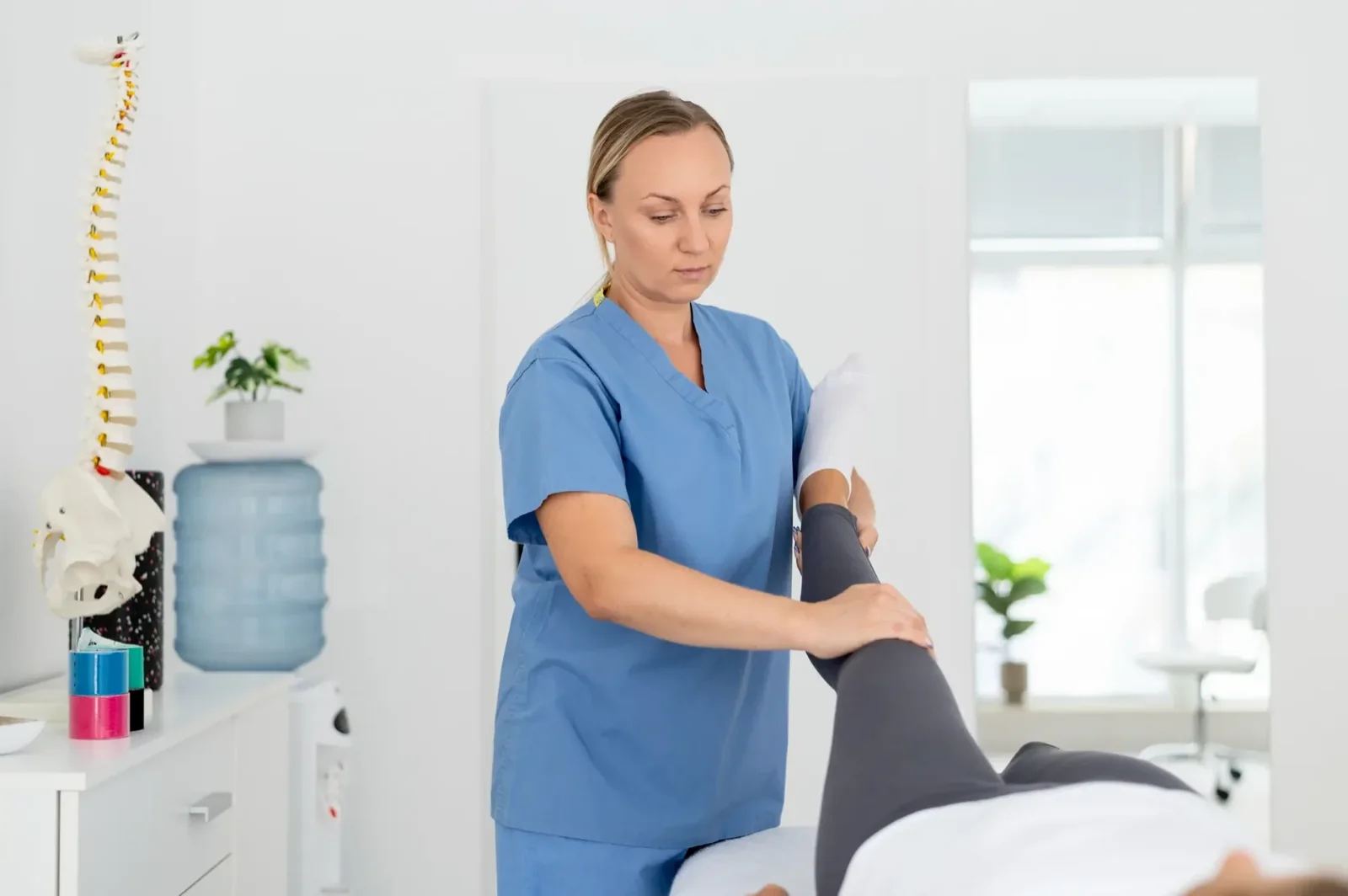
- Physiotherapy: exercises tailored to you to strengthen the trunk and hip muscles, stretching and better movement patterns. Following the guidelines, this is the core of treatment.
- Manual therapy: hands-on techniques to improve range of motion. When pain is strong it can “open a window” for exercise, but in line with NICE always together with exercise.
- Combined therapy: both in one 50-minute session.
The plan follows the levels of the MozgásPiramis®: after pain relief come range of motion, strength, stability and finally full load capacity. The exercises fit your day, whether that means a desk, driving or the hills of Buda.
When should you see a doctor or call an ambulance?
With back pain, these signs need urgent care (call 112)
- weakness or numbness in both legs;
- loss of feeling around the genitals or the anus;
- new problems passing urine or stools;
- back pain together with chest pain;
- pain after a serious accident or fall.
See a GP if the pain has not improved after a few weeks or keeps getting worse (NHS). The same applies if it is worse at night or lying down, or comes with weight loss, fever or a swelling on the back.
What is the next step?
If your back pain keeps returning and limits you, book an assessment at whichever clinic is closer: Retek utca 26, by Széll Kálmán tér, or Házmán utca 4, by Budagyöngye. The price and the process are the same at both; the first-visit article tells you what to expect.
If the pain spreads into your leg with numbness, the herniated disc article is the right next read. If the pain is felt more around the hip or groin, the hip pain article is also worth reading. The lower back pain page lists the related treatments and prices.