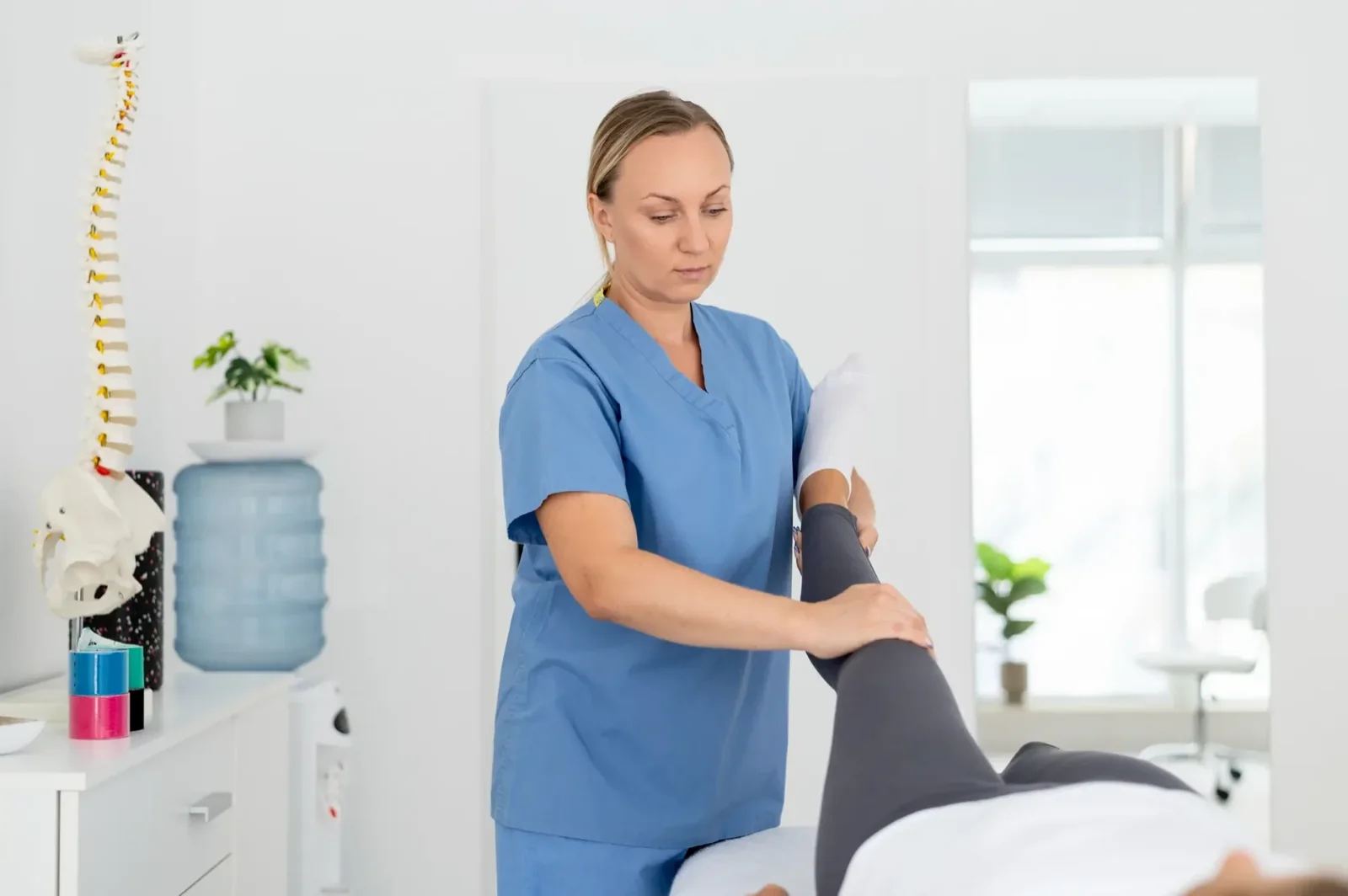
Hip pain is common, especially with age. The NHS says to see a GP if it is no better after two weeks of home treatment, affects your sleep or daily activities, or the hip stays stiff over 30 minutes after waking. A physiotherapist starts with an examination.
How does the hip work?
MedlinePlus, from the US National Library of Medicine, describes the hip as a ball-and-socket joint: the ball at the end of the thigh bone fits into a socket in the pelvis. This makes the hip very stable while allowing a wide range of motion. A healthy hip takes great force to injure, but sport, running, overuse or a fall can lead to injury, and some conditions, such as osteoarthritis, can cause pain and limited motion.
What can be behind hip pain?
The NHS describes several possible causes, based on symptoms:
- severe pain and unable to walk after a fall or injury: a hip fracture;
- pain, swelling or bruising after intense or repetitive exercise: a sprain, strain or tendonitis;
- over 45, pain worse when walking and stiffness after moving: osteoarthritis;
- pain and stiffness worse after not moving, for example on waking: rheumatoid arthritis;
- pain spreading to the thigh, worse lying on your side: bursitis.
The NHS specifically asks you not to try to diagnose the cause yourself. Pain around the hip can also come from the lower back, so the examination covers the spine too; the article on lower back pain explains more.
What does Hungarian guidance say about hip osteoarthritis?
The NHS notes that osteoarthritis most often causes problems in the knees, hips and small joints of the hands. The 2024 Hungarian professional guideline on hip osteoarthritis calls land-based exercise therapy the cornerstone of conservative, non-drug treatment, and recommends that a physiotherapist supervises it.
The same guideline sets out, as grade “A” recommendations, that physiotherapists should be involved in the treatment plan as early as possible, and that patient education should encourage self-management, so that patients find their own balance of activity and rest. It recommends manual therapy as a complementary method. Decisions on surgery and medicines are made by a doctor.
What can you do at home?
The NHS suggests avoiding putting too much strain on the hip, while keeping moving if you can and not overdoing it. Avoid carrying heavy things and sitting in low chairs, which put extra pressure on the hips; comfortable shoes with a soft sole can help. For ice packs and pain relief, the NHS hip pain page gives detailed guidance.
We deliberately publish no exercise routine here: with the hip, it matters a great deal which movement tolerates how much load, and the examination shows that.
What does the physiotherapist examine?
At the 60-minute assessment the physiotherapist asks where and when it hurts (groin, outer thigh, buttock), how far you can walk, how you sleep and what your morning stiffness is like. Then they check:
- range of movement of the hip in every direction, and which movements hurt;
- strength of the buttock and thigh muscles, including on one leg;
- your walking and stair climbing;
- how your lower back and knee work, as these often change together with the hip.
Bring any X-ray or MRI report or orthopaedic opinion. If a medical work-up is needed, the physiotherapist will tell you.
Who works with hip problems at the two clinics?
- Retek utca: Deák Borostyán lists treating hip pain, and Rideg Szofi treating shoulder, hip and knee pain, among their fields.
- Pasarét: Sztányi Borka lists hip and knee exercise as a specialism.
Which treatment may be suggested?
You get a recommendation after the examination, and treatment starts in the same session. The main element is usually supervised physiotherapy: gradually building the strength of the muscles around the hip and movement control, matched to the load you can take. Manual therapy may be added as a complement. The number of sessions and the outcome cannot be promised in advance; they depend on your starting point and how you respond.
Before and after hip replacement surgery, the article on rehabilitation after surgery helps, and the article on knee pain covers the knee.
When is hip pain urgent?
With hip pain, do not wait for physiotherapy if
According to the NHS, call an ambulance (112) if:
- you have severe hip pain after a fall or injury;
- you cannot walk or put weight on your leg;
- you have tingling or loss of feeling in your hip or leg after an injury.
Get medical help the same day (your GP or an out-of-hours service) if severe pain started suddenly without a fall, the hip is swollen and hot, the skin around it has changed colour, or you feel unwell with a high temperature. After an injury, do not drive yourself to hospital.
What is the next step?
If hip pain keeps coming back or limits your walking and sleep, book an assessment at Retek utca 26 or Házmán utca 4; no referral is needed. Treatments and prices are on the hip pain page.